
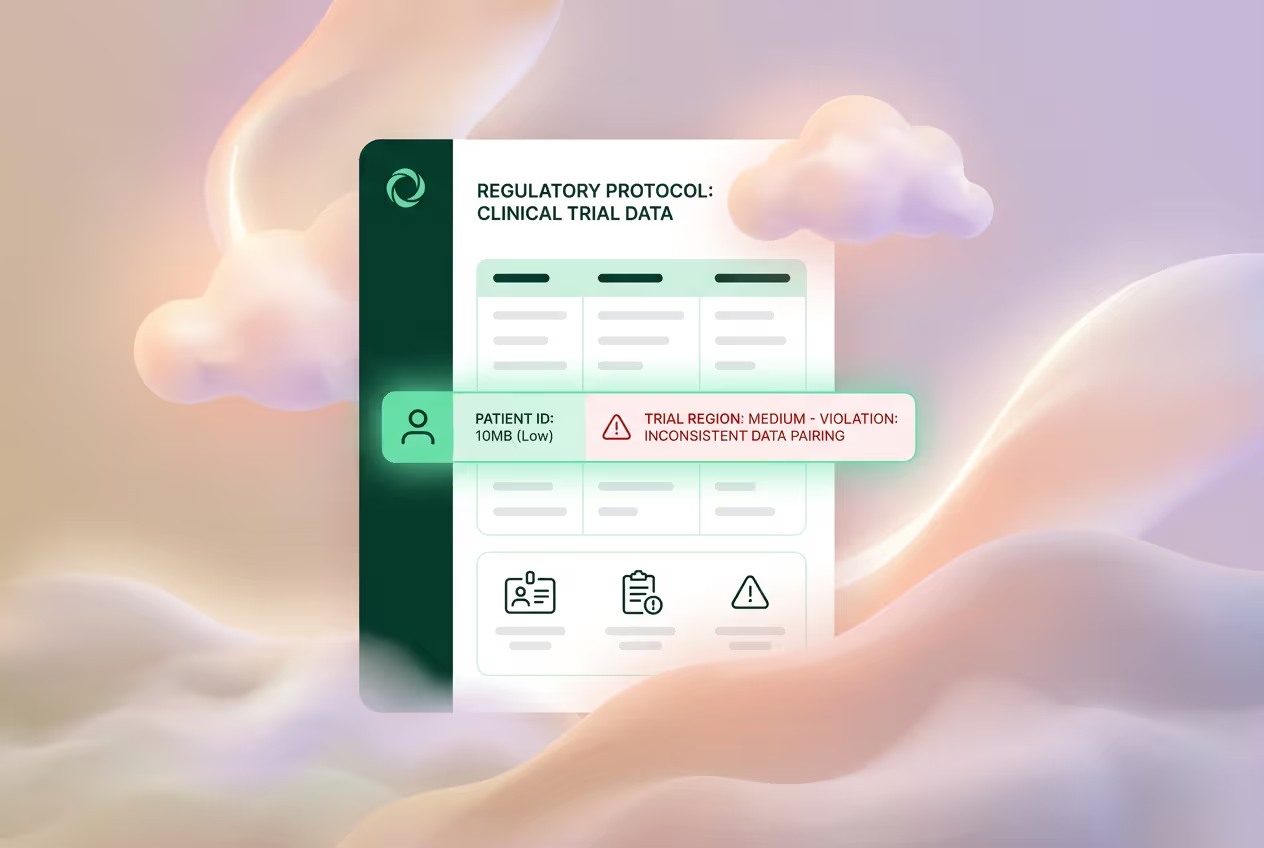
Clinical trials fail often — and one of the main reasons is not ineffective treatments.
The reason is often execution failures, or the inability to capture, align, and act on the enormous volumes of operational activity and data that’s generated across study sites, vendors, and systems.
If operational oversight isn’t designed for the complexity of modern clinical trials, small and avoidable execution issues can quickly cascade into problems that threaten a study’s integrity.
Below are 5 execution failures that undermine clinical trial integrity — and why modern operational oversight is becoming essential to prevent studies from quietly failing.
1. Incorrect Eligibility at Enrollment
One common execution failure in a clinical trial occurs when a patient is enrolled in a study despite not fully meeting protocol eligibility criteria.
This can happen unintentionally as a result of enrollment teams needing to manage complex inclusion criteria and exclusion criteria while working under pressure to meet recruitment goals, or patients self-report incorrectly.
Human error is inevitable, and in small numbers, these types of eligibility deviations may not jeopardize a trial. But, when multiple ineligible patients with similar deviations are enrolled and the issue is not identified early, the study population becomes contaminated.
If those patients are not replaced quickly enough, the validity of the trial may be compromised — and in some cases, the study may ultimately fail.

2. Protocol Deviations Go Undetected
With dozens or even hundreds of sites participating in one study, operational signals can be difficult to detect early. Research shows around one-third of patients in Phase 3 trials alone experience protocol deviations.
Examples include:
- incorrect dosing of treatment
- missed visits
- incorrect visit windows
- incomplete study procedures
While this information is typically captured across trial systems, delays in identifying these issues can allow deviations to affect study endpoints and raise concerns during regulatory review. Over time, small isolated deviations can accumulate into meaningful threats to trial integrity.

3. Inconsistent Data Capture Across Sites
With the level of complexity in clinical trials today, inconsistencies in data capture can emerge between sites and reported incorrectly through multiple systems.
Examples include:
- missing eCOA entries
- delayed EDC submissions
- inconsistent reporting practices across sites
If these discrepancies are not identified early, they may only surface during later stages of the trial — when correcting them becomes far more difficult and costly.
4. Site Performance
Clinical trial sites understandably operate under significant pressures. Coordinators and investigators often manage multiple studies simultaneously while balancing patient care.
In this environment, site-level execution challenges can occasionally emerge during trial conduct, including:
- limited protocol training
- slow or inconsistent enrollment patterns
- missed or rescheduled visits
- scheduling difficulties
- delayed data entry or reporting
When these issues are not identified early, they can introduce delays into the trial, affect protocol adherence, and ultimately put trial integrity at risk.

5. Fragmented Oversight Across Systems
Modern clinical trials rely on numerous systems to manage operations and data, including:
- EDC
- CTMS
- eCOA platforms
- monitoring reports
- spreadsheets and vendor tools
While each system serves a purpose, oversight is often fragmented.
When operational signals are scattered across disconnected systems, critical issues can go unnoticed. Study teams, CROs, and sponsors lack a unified view of what is happening across the trial and what may once be a smaller issue could compound if identified too late.
This fragmentation can delay issue resolution and increase the likelihood that execution problems have already impacted the study.
Conclusion: Protecting Clinical Trial Integrity Through Better Operational Oversight
Clinical trial integrity is not only about protocol design and data capture — it is about execution.
The faster teams can detect operational signals and act on them, the more likely trials are to maintain integrity, remain inspection-ready, and stay on track.
This is why modern operational intelligence platforms are so crucial to a clinical trial lifecycle. They help study teams detect risk earlier, coordinate action faster, and maintain continuous oversight across a trial. Platforms like Espresso address the root cause of clinical execution challenges by unifying fragmented trial data across EDC, IRT, eCOA, CTMS, and study timelines and providing real-time visibility — from site to sponsor.
By transforming operational data into prioritized, role-specific, and actionable intelligence, Espresso helps study teams identify risks as they emerge, route actions to the right stakeholders, and ensure issues are addressed before they compromise trial integrity.
The result: fewer protocol deviations, faster decision-making, and trials that remain on track — ultimately helping bring new therapies to patients faster.
