

RBM improved clinical trial oversight — but it was never designed to work alone.
Organizations built KRI frameworks, defined risk thresholds, trained teams, and moved away from traditional on-site monitoring. The methodology is sound, the regulatory direction clear, and the intent exactly right.
And yet nearly 80% of clinical trials still miss their original enrollment timelines.¹ Deviations continue to compound before anyone acts. Flagged risks sit unresolved for weeks. And somewhere between the dashboard and the site, the oversight breaks down.
The Data Problem No One Fixed
Risk-Based Monitoring assumes visibility across the highest-risk issues within a clinical trial.
However, operational data lives in disconnected systems — site visit logs in one, protocol deviation records in another, CRA notes buried in emails or spreadsheets.
A 2021 survey of nearly 5,000 clinical trials found that centralized monitoring — one of the components most critical to unified data visibility — was implemented in less than half of ongoing studies.2
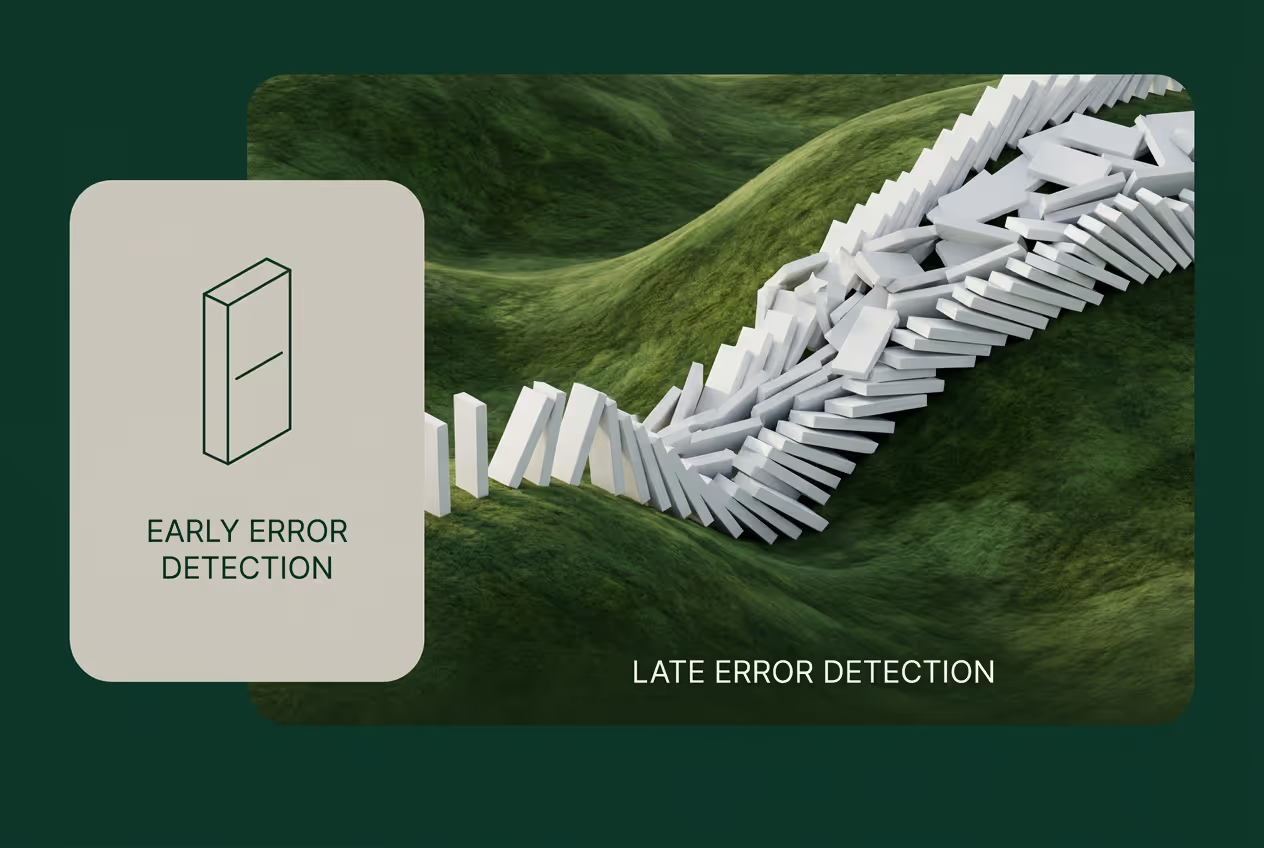
When data is fragmented across disconnected systems, risk does not disappear. It hides and compounds quietly until it surfaces in a review meeting — often after the damage is already done.
By the time a signal appears in a periodic report, it may already be weeks old. An ineligible patient may already be enrolled, a protocol deviation repeated across multiple sites, or enrollment patterns already compromising study integrity.
In a study generating thousands of data points across dozens of sites every single day, periodic review chases risk instead of staying ahead of it.
Detection is Not the Same as Resolution
RBM was designed to make oversight more proactive, but detecting a problem and resolving it are not the same thing.
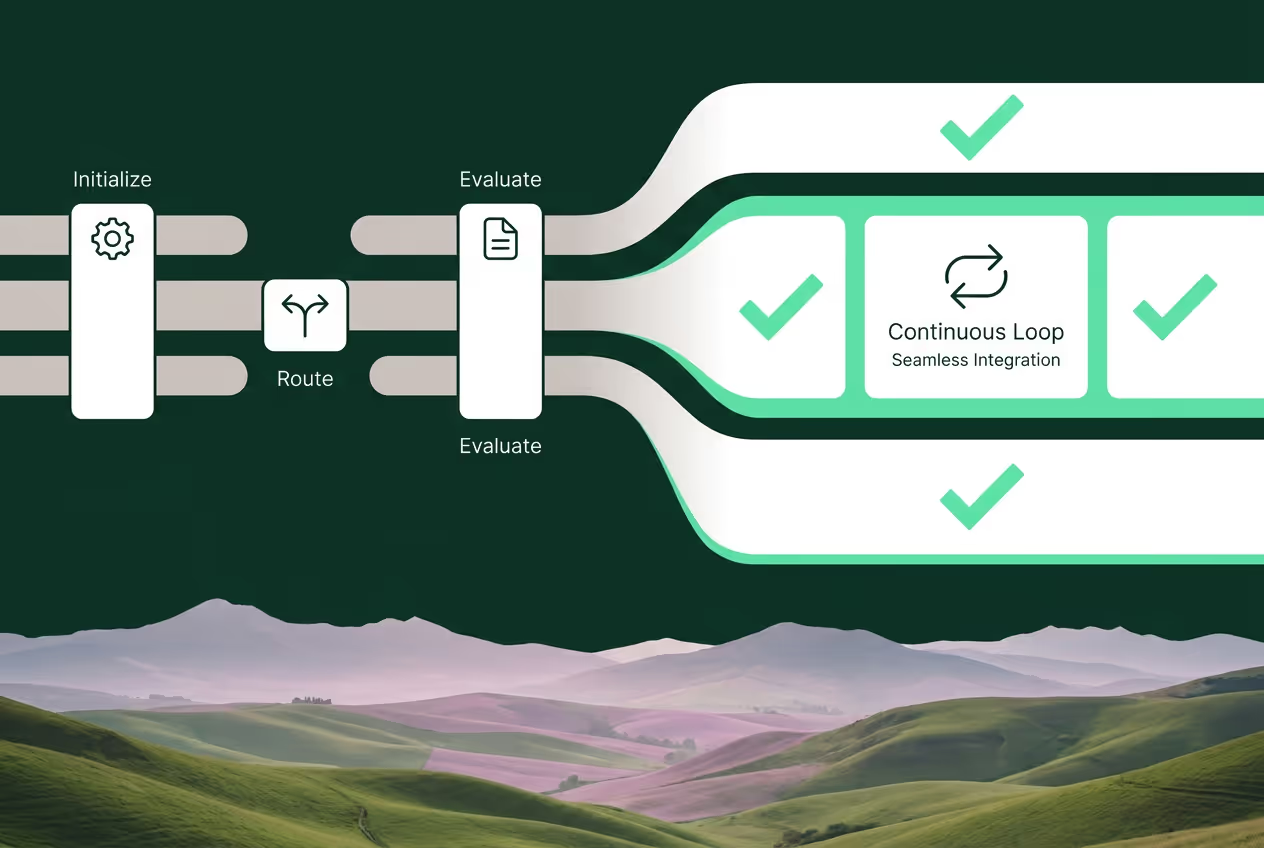
Most RBM programs are good at surfacing signals. Few close the loop — assigning ownership, recommending an action, tracking follow-up, confirming resolution, and maintaining an audit trail without manual coordination.
That gap between insight and action is where protocol deviations accumulate — CRA time gets consumed by administration, and trials fall quietly behind.
Final Thoughts
The Missing Layer
RBM at full maturity looks less like a monitoring program and more like a continuous operational feedback loop, one where risks surface as they emerge, action is assigned without waiting for the next review cycle, and resolution is tracked through completion.
Not another dashboard, but an infrastructure that closes the loop automatically so clinical teams spend less time on administration and more time making decisions.
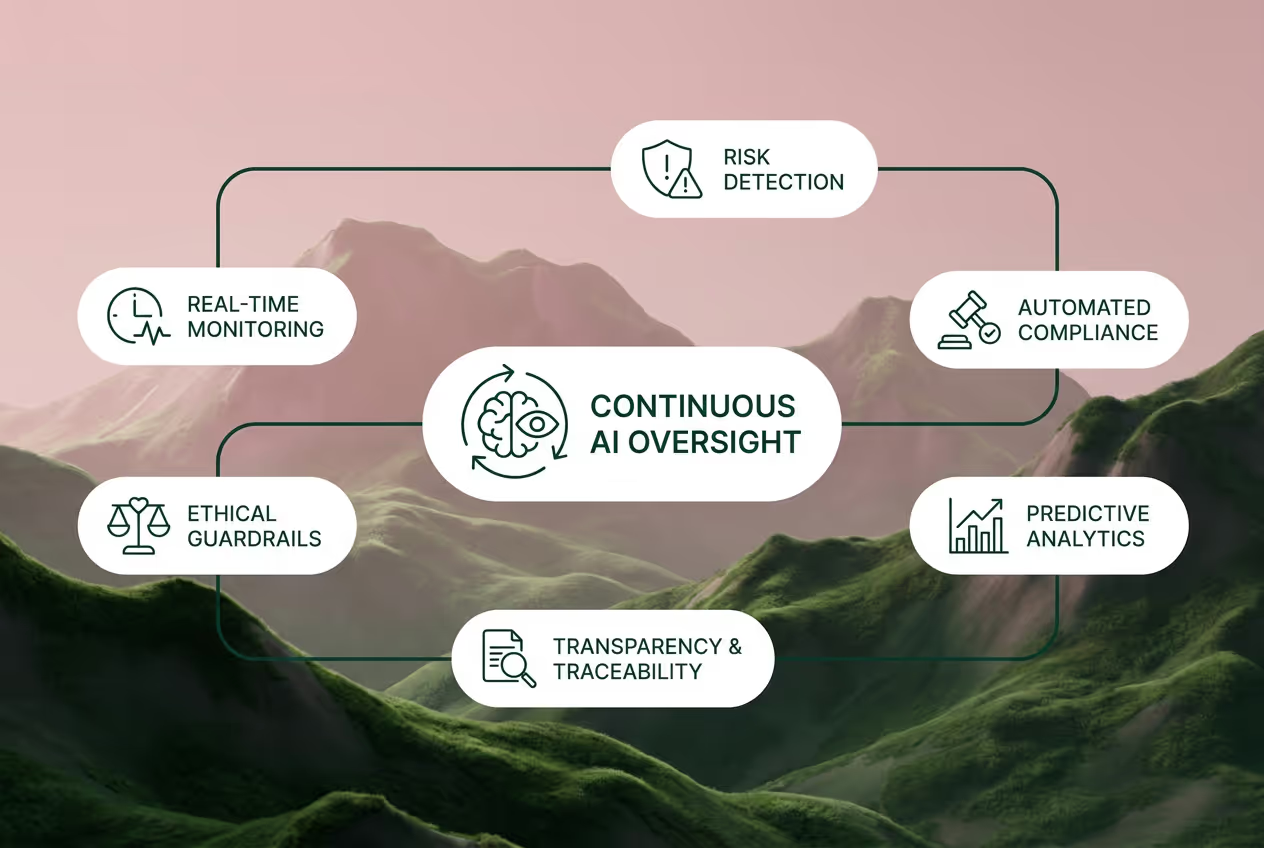
AI makes that possible in a way that was not realistic even a few years ago. Not as a replacement for clinical expertise, but as the mechanism that keeps oversight connected, traceable, and actionable — without adding to the burden of the people responsible for delivery.
That is what Espresso was built to do. Not to replace what RBM got right, but to give it the operational foundation it was always missing.
Drug development already can take 10 years or more.3 Some delays are unavoidable. But many are not the cost of clinical complexity. They are the cost of running the right strategy on the wrong operational foundation.
¹ Brøgger-Mikkelsen M, et al. J Med Internet Res. 2020;22(11):e22179.
² Adams A, et al. Risk-Based Monitoring in Clinical Trials: 2021 Update. Ther Innov Regul Sci. 2023;57(3):529–537.
³ DiMasi JA, et al. J Health Econ. 2016;47:20–33.
